6 Things to know about landing pages
The right landing page converts visitors into clients. It will engage them, answer their questions, and make them eager to work with you.
It will share:
- what your offer is.
- who it’s for.
- why you created the offer.
- and, what transformation your offer provides and how.
These pages, which are also known as lead capture pages, post-click pages, splash pages, static pages or squeeze pages, provide a direct entry into your sales funnel and are an integral component of your online business.
Unlike webpages which contain links to other pages and a variety of calls to action (CTAs), a landing page is a standalone page with one call to action and usually no other external links.
Who needs One?
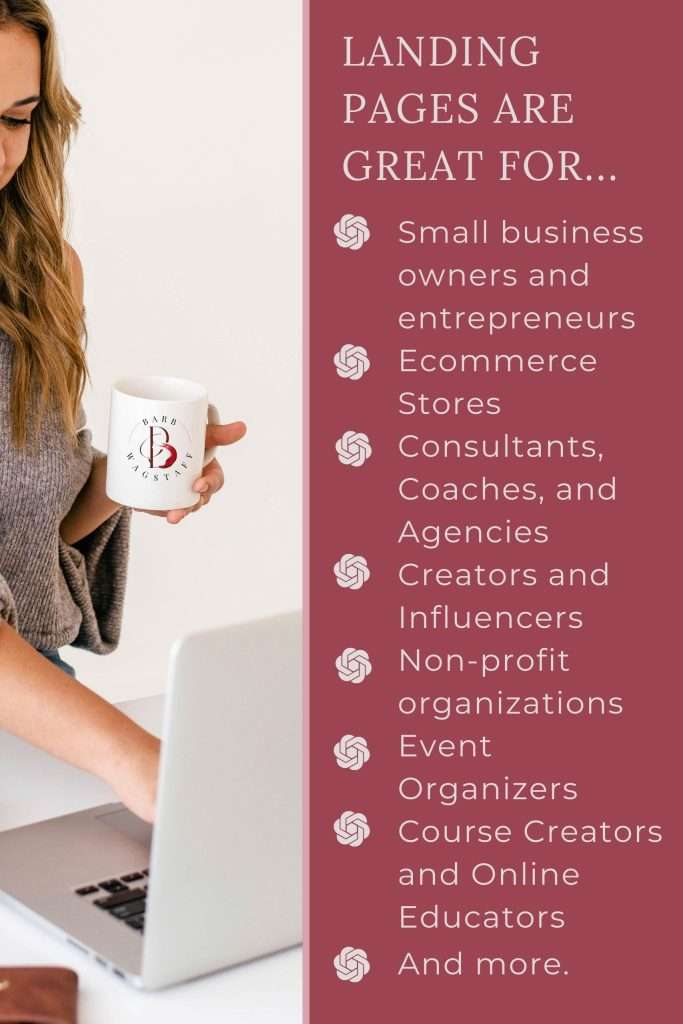
A landing page offers a way for you to capture leads, promote offers, or drive conversions.
This is especially helpful for people like:
- Small business owners and entrepreneurs who want to drive specific actions, like booking consultations, collecting contact information, or showcasing a special offer, without distracting elements.
- Ecommerce Stores can use landing pages to promote sales, seasonal campaigns, product launches, or exclusive discounts, encouraging visitors to make quick purchase decisions.
- Consultants, Coaches, and Agencies find these types of pages helpful to create a streamlined way to capture leads for consultations or program enrollments. They can be paired with a lead magnet or a booking form to drive direct engagement.
- Content Creators and Influencers use landing pages to gather followers’ information, share resources like e-books or guides, and invite fans to subscribe to newsletters or events.
- Non-profit Organizations can use them for specific fundraising campaigns, volunteer signups, or event registrations.
- Event Organizers also can use landing pages to capture essential event information, allow registrations, and promote early-bird pricing or special discounts to increase attendance.
- Course Creators and Online Educators also benefit by using landing pages to launch new courses, capture leads, showcase course details, and create a single destination for course signups.
No matter who you are, these types of pages offer you a fantastic way to build your email list. Your list then allows you to share tips, offers, and products and nurture your relationship with people who have already expressed an interest in what you are offering.
What type of content should you share?
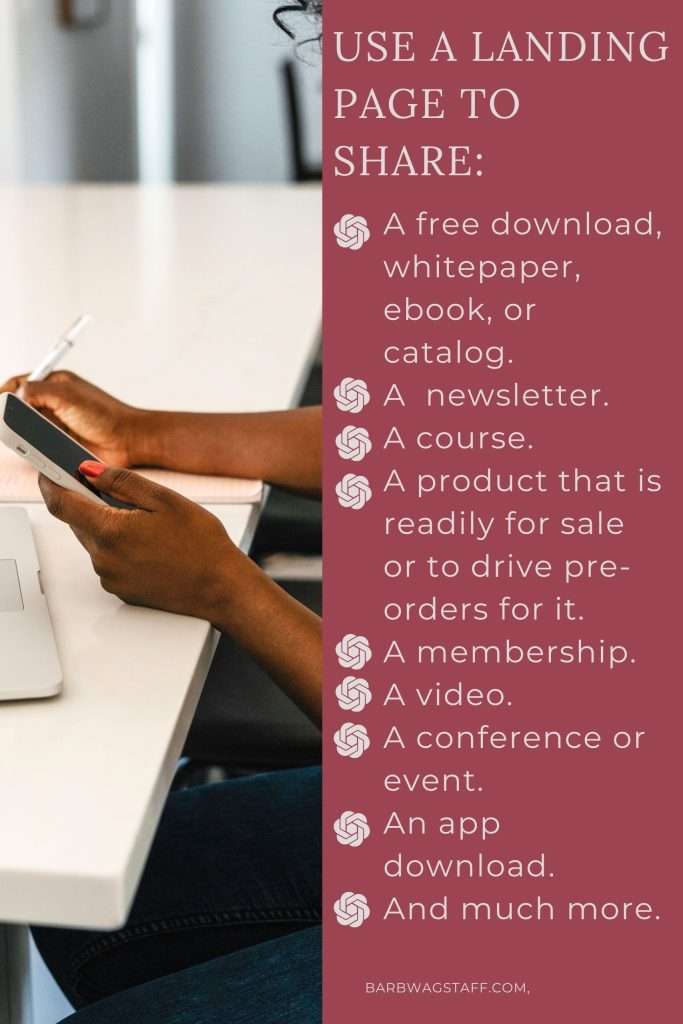
You can create a landing page to share to things like:
- A free download, whitepaper, Ebook, or catalog.
- Your newsletter.
- Your course.
- Your product or driving pre-orders for it.
- Your membership.
- Your video.
- Your conference or event.
- An app download.
- And much more.
Why should you have a landing page?
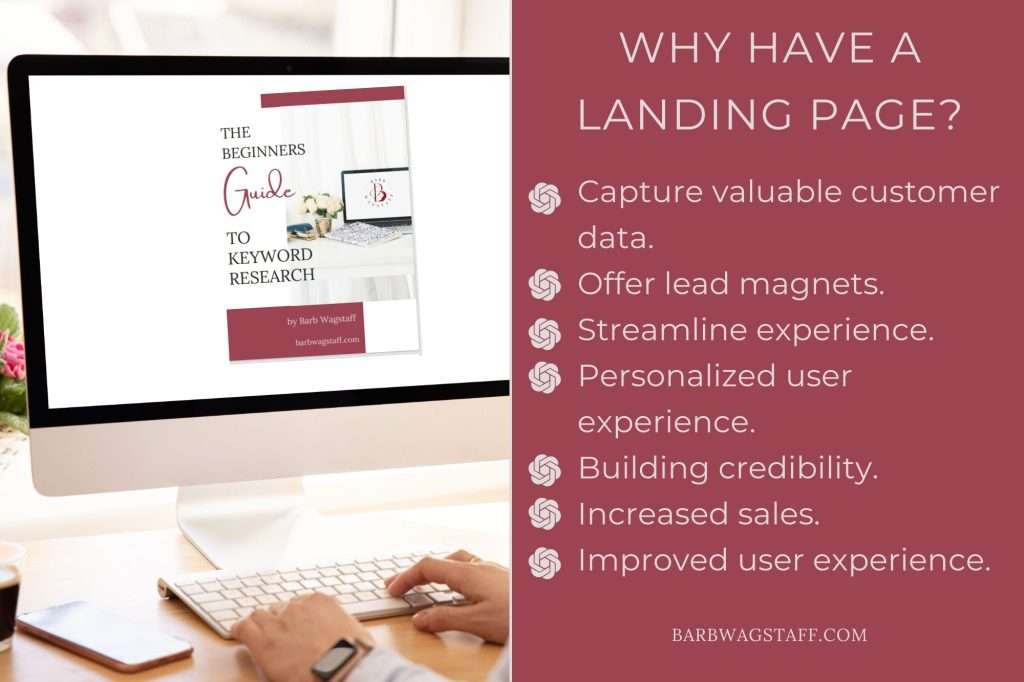
Landing pages streamline the visitor’s journey.
They allow you to trade your content for their personal information (and financial investment) for your product or deliverable.
Other reasons for having them include:
- Capture Valuable Customer Data: Landing pages often include lead capture forms, such as email sign-ups or contact forms, which allow businesses to build a list of qualified leads who are already interested in the offer.
- Offer Lead Magnets: Such pages can offer valuable resources (e.g., guides, e-books, webinars) in exchange for visitors’ contact information. This allows businesses to attract leads in a non-salesy way, increasing trust and engagement.
- Streamlined Experience: With a clear purpose, landing pages help guide users down a pre-determined path, reducing confusion. Visitors know exactly what action to take, thanks to well-placed calls-to-action (CTAs) and strategically organized information.
- Personalized User Experience: Because they can be specific to different segments of your audience, these pages help to deliver tailored content, increasing the likelihood of conversion by speaking directly to the needs or interests of each user group.
- Building Credibility: Because landing pages can incorporate testimonials and case studies, these elements can reassure potential customers that the business is reputable and offers a positive experience.
- Increased Sales: Pages like these offers a detailed look at features and benefits of a product or service. This helps to clarify the value and encourage purchases.
- Improved User Experience: Landing pages cut down on the need for multiple clicks or excessive navigation. It is simpler and more enjoyable for users to find what they are looking for and take action.
A well-crafted landing page allows businesses to create focused, compelling experiences that drive visitors toward a single goal, whether it’s signing up for a newsletter, making a purchase, or downloading a resource.
With clear, actionable insights and greater control over the user journey, landing pages are essential for maximizing the impact of any digital marketing strategy.
Do you have to have a website?
No, you don’t have to have a website to use a landing page. You can make a landing page using external apps like MailerLite, Unbounce, Convertkit, and many others.
Using tools like the free version of MailerLite, you can begin to share content and capture emails through a landing page before your own domain.
Can you put a landing page on your website?
Just as you don’t have to have a website to create landing pages, if you do have a website you don’t have to use a third-party app. You can build your landing pages on your site. Be sure that you have the plugins necessary on your website to capture emails and other data.
Also, remember to disable your header navigation to keep the focus on your offer.
What are the key components?
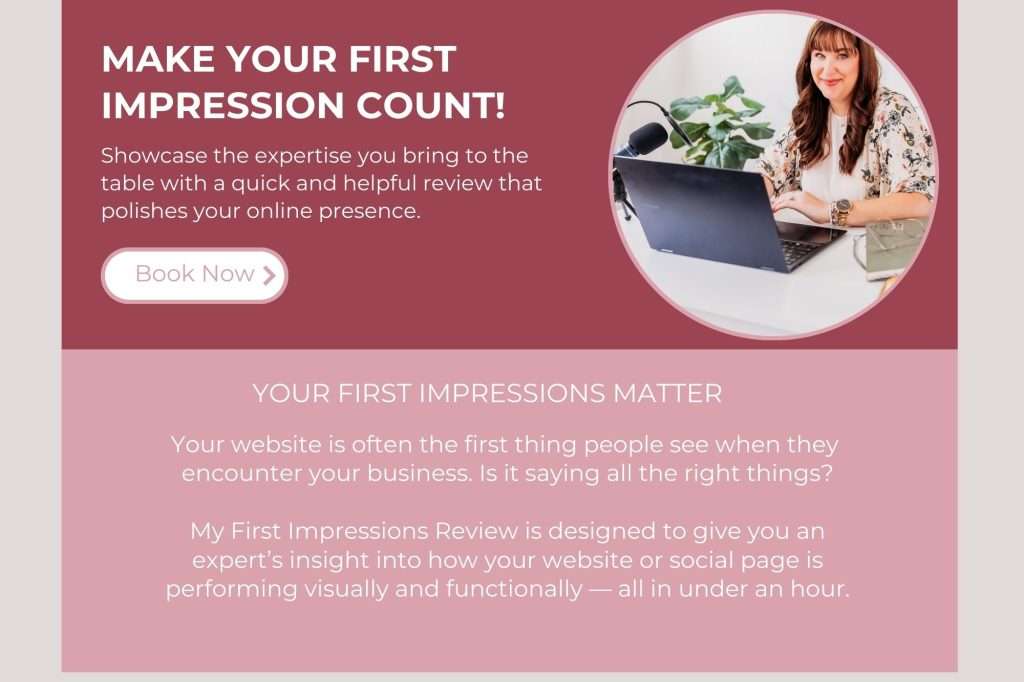
1. Hero Section
The hero section of your landing page is your opportunity to grab your visitor’s attention and tell them:
- What you do.
- How you differ from the competition.
- The key benefits of your product or offer.
- How they can get started.
Your introduction here should be irresistible. They should be able to skim this section and know exactly what you are offering.
Start with an attention-grabbing headline. It should be concise and relevant to your offer.
You can add a subheading to either provide additional context to the headline or convey a secondary persuasive message.
Finally, your hero image according to Semrush should be “a graphical element designed to make your landing page more visually appealing. It’s big. And eye-catching. And located near the top of the page.”
The image should be simple and uncluttered. It should complement the overall design and style of your page. It should help the reader to understand the value of your product and service. Finally, always make sure that your hero image is created with high-quality graphics.
2. Supporting copy
Your supporting copy should be brief. Consider using bullet points to highlight the key details.
It should include your unique selling position.
Describe the benefits as well as features of your offer.
What positive impact will this offer have on your reader?
Finally, include social proof. This can take the form of direct quotes from customers, case studies, video interviews/testimonials, logos of customer companies, review scores.
Do not fake your social proof, use real testimonials and real people.
3. Form
Your landing page must include a form that will allow you to capture your visitor’s details like their name, email, and phone number.
If you are servicing an area that is governed by GDPR, you will also want to include your compliance information here.
4. Call-to-action (CTA)
It is important to have a strong call of action that is prominently displayed on the page. If you are using a longer landing page, make sure to include your CTA in multiple places,
Your call-to-action button should indicate what will happen when the visitor clicks it. Make sure to use conversational words and phrases like “Sign up”, “Try it now”, “Get started”, “Start my free trial”, etc.
5. Footer
Remember, you don’t want people to be able to navigate away from your page without clicking on your CTA. Your footer should therefore be limited to a link to your privacy policy and terms of use, your brand logo, and a copyright statement.
Final thoughts
A landing page can be as short or as long as you feel is needed for your offer.
If you are giving away something for free, a short page with a hero image, heading, form, and call-to-action may be enough. As the cost of your offer increases, you may wish to expand the content of your landing page. Remember to add multiple CTAs throughout the copy.
Short or long, it is important that you remember to optimize your landing page for search engines. Be selective with the keywords that you use. You want to attract the individuals who are ready to act on what you are offering. The more specific your keyword is, the more likely the person searching for that keyword will convert.
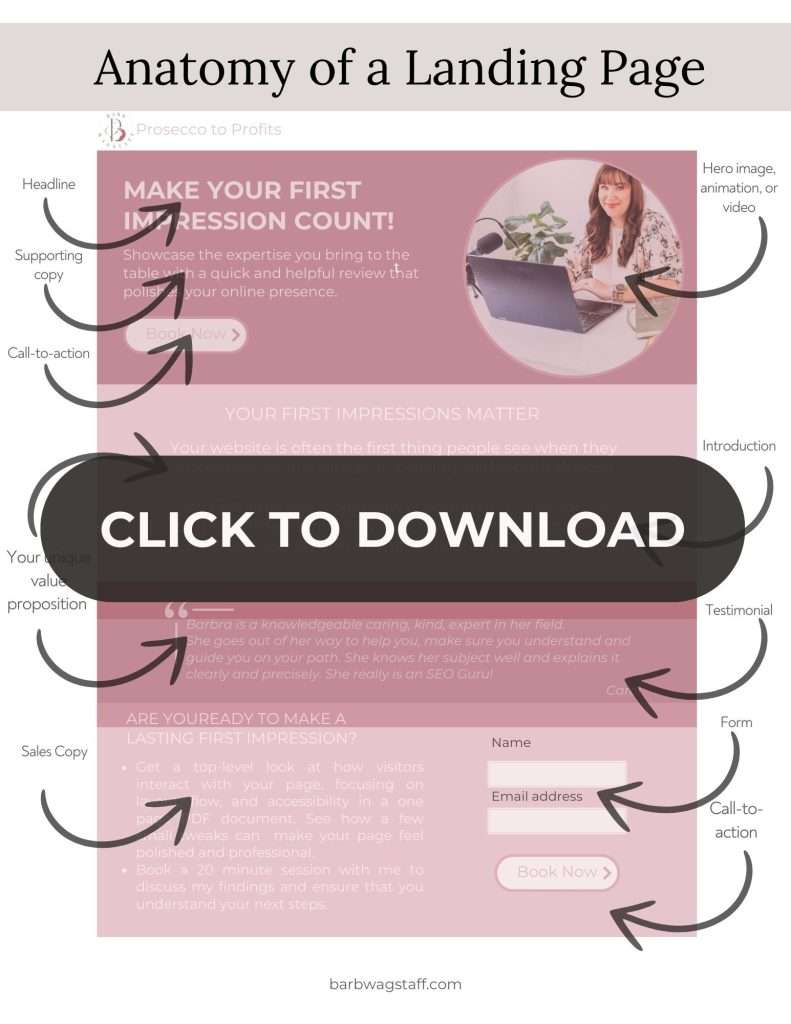
Your landing page must haves!
Learn the Anatomy
Access this free guide and to ensure that your next landing page pops!