How Meta Tags and Meta Descriptions can boost your website

In the world of Search Engine Optimization (SEO), understanding the significance of meta tags and meta descriptions is crucial for achieving optimal online visibility. While it is no longer helpful to stuff your keywords in a string of hidden meta tags, these behind-the-scenes elements still play a pivotal role in influencing search engine rankings.
Please note that affiliate links are used in this content. This means that if you choose to make a purchase using this link, I will receive a commission. It will not cost you anything extra, but will allow me to continue providing you with great content!
What are meta descriptions?

Meta descriptions are HTML elements that provide short descriptions of your webpage. They hold immense value in enticing users to click on your link. Think of them as your page’s elevator pitch.
The meta description is a snippet of content that should be around 150-160 characters long. This text should align with the page content to enhance user engagement. It will not be displayed on the pages that the user sees, but can appear in Google’s search results.
According to Google, a quality meta description “can go a long way to improving the quality and quantity of your search traffic.” This makes them a critical part of your on-page SEO.
How to write a meta description
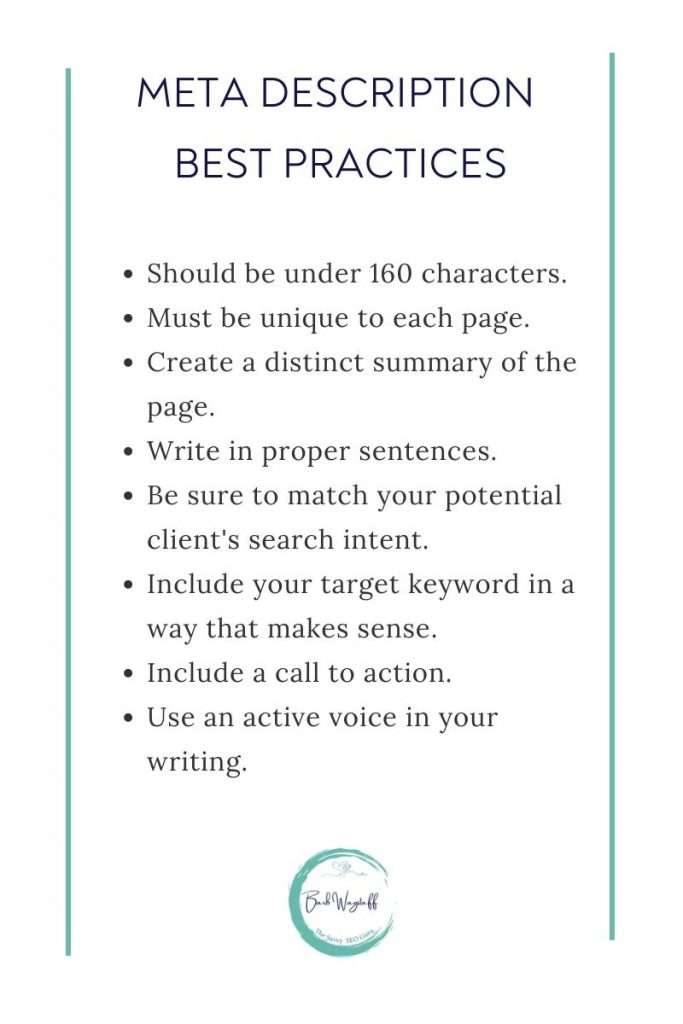
Your meta description should not be a list of keywords. It should be a distinct summary of the page using proper sentences. You should use your keywords in your description but only in a way that makes sense and doesn’t sound awkward.
Each page of content should have its own unique and descriptive meta description that is under 160 characters in length.
Examples of meta descriptions:
Meta descriptions should unique to each page.
If you ran a cupcake shop, the meta description for your home page might read “Enjoy a variety of moist and delicious cupcakes. Open daily 12pm-8pm, located in The Mall.”
A person who has a cooking blog may have a page about preparing potatoes. The meta description for that page could read “Learn how to cook potatoes with this complete guide in 1 hour or less. We will cover all methods, including: boiled, mashed, baked, twice-stuffed, and scalloped.”
Your product pages should also have keyword rich descriptions. If you were selling t-shirts, your meta description might read “Printed sustainable t-shirts made from 100% fair trade organic cotton dyed with non-toxic dyes in Fair Traded certified factories.”
Where do you put your meta description?

Meta descriptions are part of the HTML code. You can manually input your meta description in the <head> section of your HTML page using the code:
<meta name=”description” content=”Write your amazing meta description here”>
If you are using a Yoast SEO plugin on WordPress or Shopify, go to the Google Preview section of the Yoast SEO tab. From there you will be able to input your meta description.
People who are using the RankMath plugin will go to the “edit snippet” section of your page. From there you will input your meta description in the block that is titled “Description”.
Both plugins will offer you tips to help you write the best meta description for your page.
If you have built your website using Wix, you can add a title tag and meta description by
- Going to your page’s SEO Settings.
- Enter your title tag under “What’s the page’s title tag?
- Enter your meta description under “What’s the page meta description?”
- Click Publish at the top right of the Editor
What about other meta tags?
Meta Keywords
Once considered influential, meta keywords have fallen out of favor with search engines. Major players like Google have explicitly stated that they no longer consider meta keywords when determining rankings. Consequently, investing time and effort in optimizing meta keywords is no longer a priority for SEO practitioners.
Meta Robot Tags
The meta robots tag allows webmasters to control how search engines index their content. By specifying directives like “index” or “noindex,” you can decide whether a page should appear in search results. Similarly, “follow” or “nofollow” determines if search engines should follow links on the page. While they crucial for effective site management, meta robots tags don’t directly impact rankings.
Why do meta tags and meta descriptions matter?

Enhanced visibility and click through rates
Meta descriptions may or may not be used by Google on a search engine results page but they are still important. Quality, compelling meta descriptions entice your potential clients to click on your content.
Appearing at the top of search results with a concise and relevant title and description increases the likelihood of users choosing your link over competitors.
SEO Friendly Branding
Consistent and optimized meta tags not only boost your SEO but also help in building a brand that users can recognize and trust. It’s like having your own VIP section in the world of search.
Making the most out of meta tags and meta descriptions

Wisely use your keywords
Use relevant keywords naturally in your title tags and meta descriptions. Avoid keyword stuffing, as it can lead to penalties from search engines. Prioritize user readability and engagement while strategically placing keywords
Make your meta description count
I can’t say it enough, craft unique meta descriptions for each page. This not only aligns with SEO best practices but also enhances user experience by providing tailored information. Utilize persuasive language to entice clicks while accurately representing your content.
Finally, Remember…
Meta tags and meta descriptions are influential tools for enhancing online visibility and user engagement.
Creating distinct, compelling, and keyword-optimized content across your website, with a focus on homepage, inner pages, blog posts, and product pages, ensures a robust SEO foundation. By understanding the role each meta element plays, you can unlock the full potential of these behind-the-scenes assets and propel your website to new heights in search engine rankings.
ACCESS THE SECRET TO
EFFECTIVE KEYWORD USAGE